Food
Omnivore
Ibises eat insects, worms, crabs and frogs.
Eats plants and animalsIbises have long, curved beaks for poking in the mud. They find worms, bugs and little crabs to eat. Here are easy ibis facts for kids: what ibises eat, how big they grow, what a baby ibis is called and where ibises live. Read them out loud, try the quiz, then color the letter I.
Two more true facts about the ibis that kids love. Tap the button to hear the name, then read each fact together.
Ibis starts with the letter I. Clap once for each part of the word as you say it.
Ibises use their long curved beak to poke in the mud.
Ancient Egyptians thought the ibis was special.
Everything a curious kid wants to know about the ibis, in eight short cards.
Ibises eat insects, worms, crabs and frogs.
Eats plants and animalsAn ibis is about 55 to 75 cm long.
Body sizeIbises live for about 15 years.
LifespanA baby ibis is called a chick.
Baby nameA group of ibises is called a colony.
Group nameIbises are found in wetlands worldwide.
Where they liveIbises have long, curved beaks for poking in the mud. They find worms, bugs and little crabs to eat.
Ibis is a birdIbis has 4 letters and starts with I.
Say: IbisA tiny game to check what stuck. Read the question out loud and let your little one tap the answer.
Done reading about the ibis? Print the free letter I sheet, say “I is for ibis” together and color the big letters. Great for circle time, morning work or a quiet afternoon at home.
Ibises eat insects, worms, crabs and frogs. That makes the ibis an omnivore, which means it is an animal that eats plants and animals.
An ibis is about 55 to 75 cm long.
Ibises live for about 15 years.
A baby ibis is called a chick.
A group of ibises is called a colony.
Ibises live in wetlands worldwide. Their favorite habitat is: wetlands.
Yes. The ibis is a bird. Ibises have long, curved beaks for poking in the mud. They find worms, bugs and little crabs to eat.
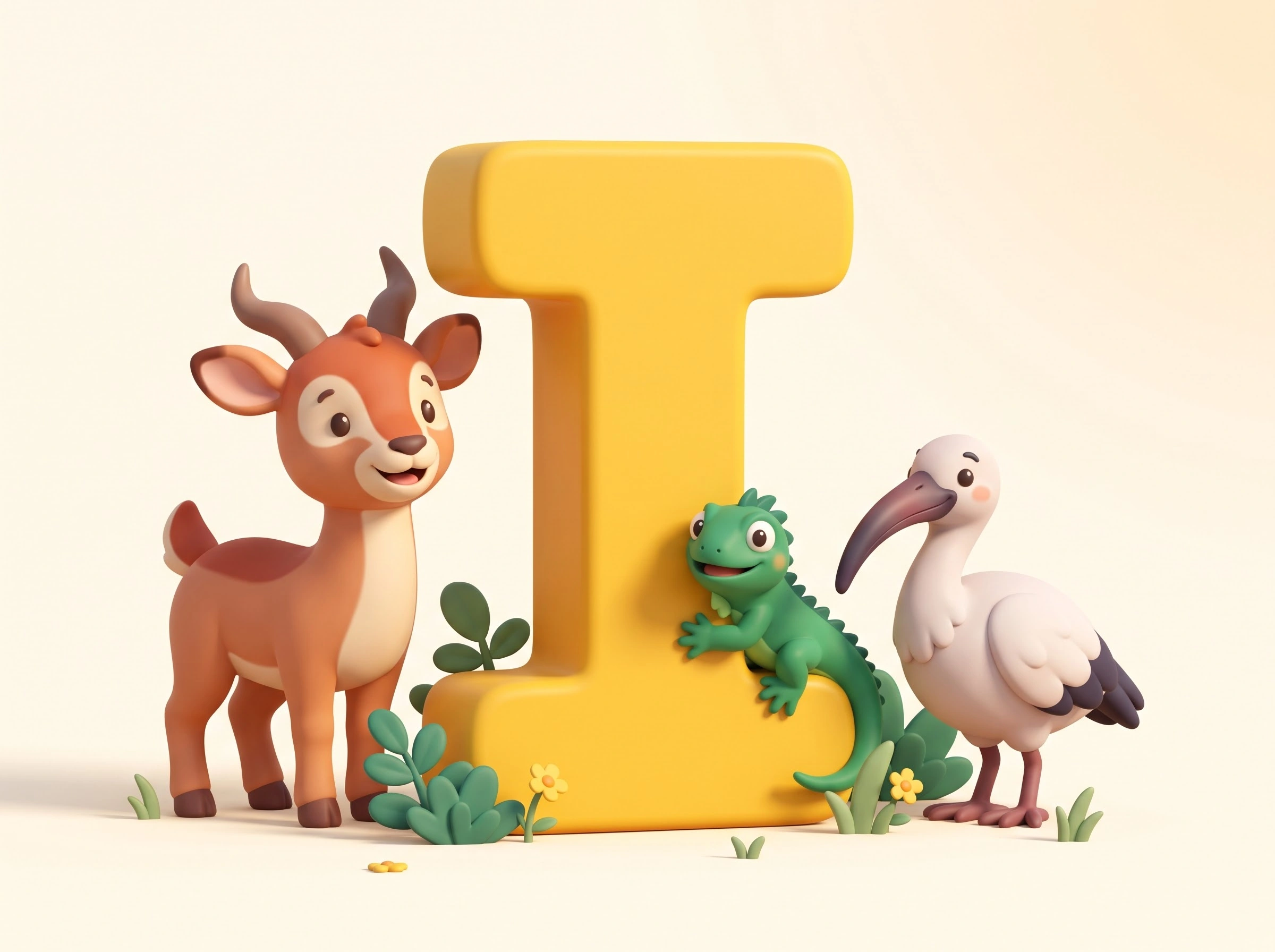
Ibis starts with the letter I. Say it slowly and listen for the I sound at the start.
Other I animals and more birds to read about next.
Green iguanas can grow to about 5 feet long, and much of that is tail. They often live in trees near water and are strong swimmers.
Lives in: Rainforests Read iguana factsImpalas can leap about 10 feet high to get away from danger. Only the males have long, curvy horns.
Lives in: Savanna Read impala factsNuthatches can walk down tree trunks headfirst. They wedge nuts into bark and tap them open with their beaks.
Lives in: Forests Read nuthatch factsKingfishers sit on branches over the water and watch for fish. Then they dive in headfirst to catch one.
Lives in: Rivers & swamps Read kingfisher facts