Food
Herbivore
Voles eat grass, roots and seeds.
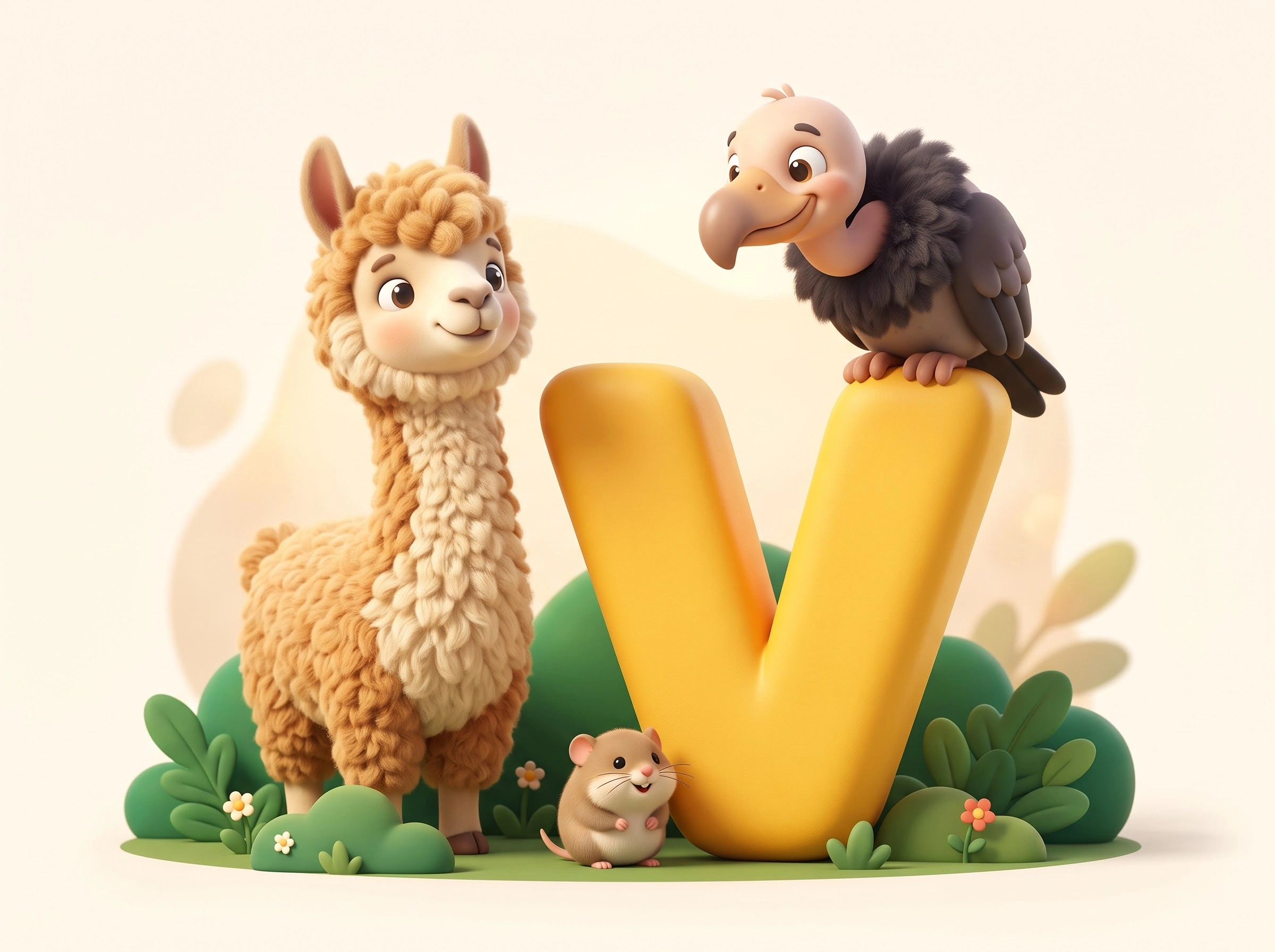
Plant eaterVoles are small, chubby rodents that look like mice with short tails. They make little tunnels and paths through the grass. Here are easy vole facts for kids: what voles eat, how big they grow, what a baby vole is called and where voles live. Read them out loud, try the quiz, then color the letter V.
Two more true facts about the vole that kids love. Tap the button to hear the name, then read each fact together.
Vole starts with the letter V. Clap once for each part of the word as you say it.
Voles look like mice but have shorter tails.
They make tunnels under snow in winter.
Everything a curious kid wants to know about the vole, in eight short cards.
Voles eat grass, roots and seeds.
Plant eaterA vole is about 8 to 18 cm long.
Body sizeVoles live for less than 1 year.
LifespanA baby vole is called a pup.
Baby nameA group of voles is called a colony.
Group nameVoles are found in North America, Europe and Asia.
Where they liveVoles are small, chubby rodents that look like mice with short tails. They make little tunnels and paths through the grass.
Vole is a mammalVole has 4 letters and starts with V.
Say: VoleA tiny game to check what stuck. Read the question out loud and let your little one tap the answer.
Done reading about the vole? Print the free letter V sheet, say “V is for vole” together and color the big letters. Great for circle time, morning work or a quiet afternoon at home.
Voles eat grass, roots and seeds. That makes the vole a herbivore, which means it is a plant eater.
A vole is about 8 to 18 cm long.
Voles live for less than 1 year.
A baby vole is called a pup.
A group of voles is called a colony.
Voles live in North America, Europe and Asia. Their favorite habitat is: grasslands.
Yes. The vole is a mammal. Voles are small, chubby rodents that look like mice with short tails. They make little tunnels and paths through the grass.
Vole starts with the letter V. Say it slowly and listen for the V sound at the start.
Other V animals and more mammals to read about next.
Vultures are nature’s cleanup crew because they eat animals that have already died. Many have bare heads, which helps them stay clean while they eat.
Lives in: Savanna Read vulture factsVipers are snakes with long fangs that fold back when their mouth is closed. Many vipers have wide, triangle-shaped heads.
Lives in: Deserts Read viper factsA camel’s hump stores fat, not water. Camels can go for days without a drink in the hot desert.
Lives in: Deserts Read camel factsZebus are cattle with a big hump on their shoulders and loose, floppy skin under their necks. They handle hot weather well, so farmers in India and Africa keep many of them.
Lives in: Farms Read zebu facts