Food
Herbivore
Wallabies eat grass, leaves and ferns.
Plant eaterWallabies are smaller cousins of kangaroos. A mother wallaby carries her baby, called a joey, in her pouch. Here are easy wallaby facts for kids: what wallabies eat, how big they grow, what a baby wallaby is called and where wallabies live. Read them out loud, try the quiz, then color the letter W.
Two more true facts about the wallaby that kids love. Tap the button to hear the name, then read each fact together.
Wallaby starts with the letter W. Clap once for each part of the word as you say it.
Wallabies are smaller cousins of kangaroos.
Joeys stay in the pouch for months.
Everything a curious kid wants to know about the wallaby, in eight short cards.
Wallabies eat grass, leaves and ferns.
Plant eaterA wallaby is about 45 to 105 cm long.
Body sizeWallabies live for about 10 to 15 years.
LifespanA baby wallaby is called a joey.
Baby nameA group of wallabies is called a mob.
Group nameWallabies are found in Australia and New Guinea.
Where they liveWallabies are smaller cousins of kangaroos. A mother wallaby carries her baby, called a joey, in her pouch.
Wallaby is a mammalWallaby has 7 letters and starts with W.
Say: WallabyA tiny game to check what stuck. Read the question out loud and let your little one tap the answer.
Done reading about the wallaby? Print the free letter W sheet, say “W is for wallaby” together and color the big letters. Great for circle time, morning work or a quiet afternoon at home.
Wallabies eat grass, leaves and ferns. That makes the wallaby a herbivore, which means it is a plant eater.
A wallaby is about 45 to 105 cm long.
Wallabies live for about 10 to 15 years.
A baby wallaby is called a joey.
A group of wallabies is called a mob.
Wallabies live in Australia and New Guinea. Their favorite habitat is: grasslands.
Yes. The wallaby is a mammal. Wallabies are smaller cousins of kangaroos. A mother wallaby carries her baby, called a joey, in her pouch.
Wallaby starts with the letter W. Say it slowly and listen for the W sound at the start.
Other W animals and more mammals to read about next.
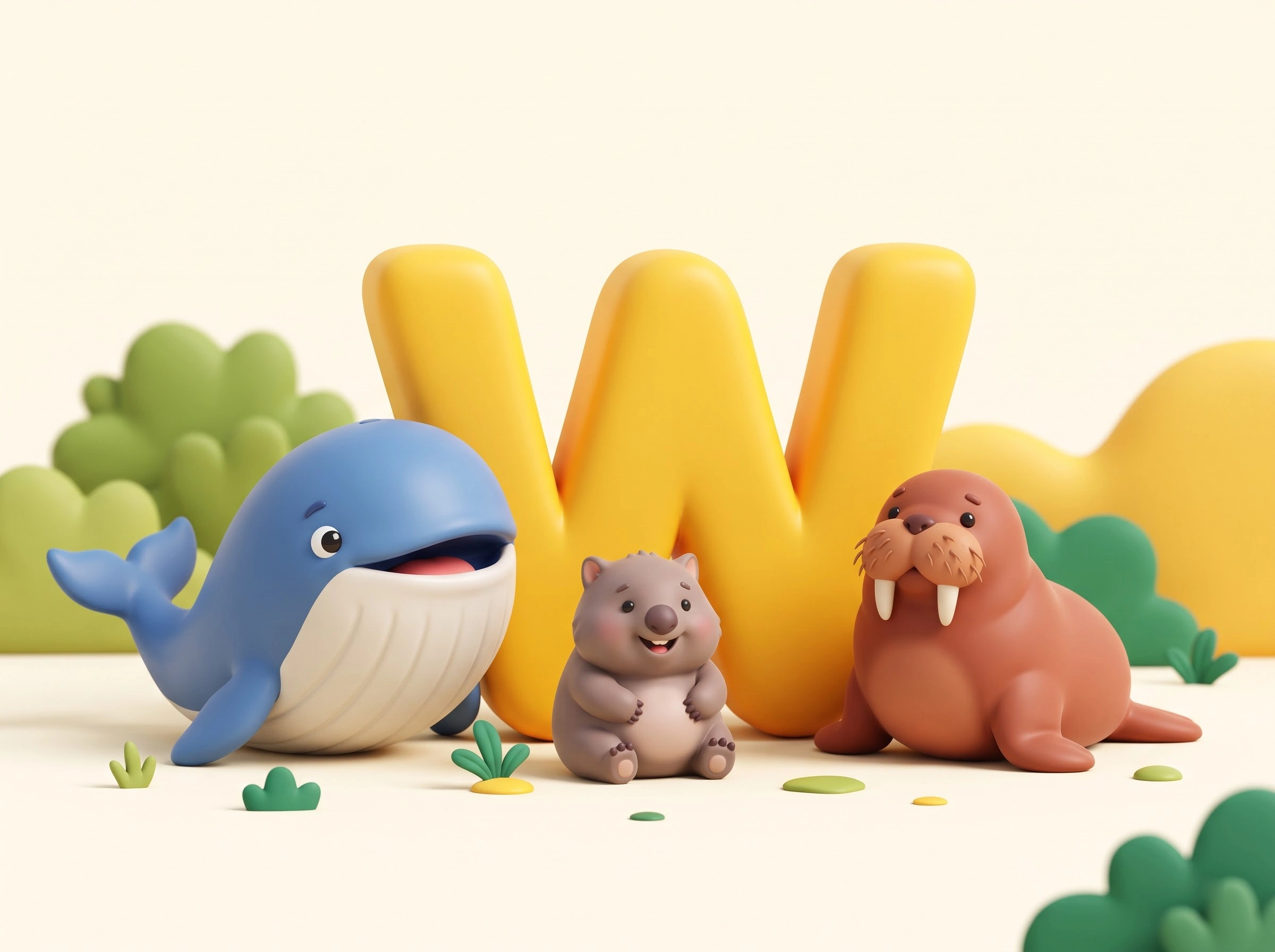
Whales are mammals, so they swim up to the surface to breathe air. The blue whale is the biggest animal that has ever lived.
Lives in: Ocean Read whale factsWalruses use their long tusks to help pull themselves up onto the ice. Their stiff whiskers help them find clams on the dark sea floor.
Lives in: Arctic Read walrus factsLions live together in family groups called prides. A lion’s roar can be heard from about 5 miles away.
Lives in: Savanna Read lion factsOrangutans spend most of their lives up in the trees. Every night they build a fresh nest of leaves to sleep in.
Lives in: Rainforests Read orangutan facts